 Khách sạn DL Homestay Coffee KYMI Villa Đà Lạt – Nơi tình yêu bắt đầu
Surprising fact: a majority of high-value account compromises in crypto are not the result of a “hack” of the exchange but of weak operational hygiene around login and recovery procedures. For a trader in the US who moves quickly between spot, margin, and derivatives on an exchange like OKX, the single most consequential session is the moment of sign-in. That instant determines whether your account remains under your control, or whether a phishing link, reused password, or a misconfigured 2FA option suddenly hands an attacker access to hundreds of thousands of dollars of leverage.
This explainer walks through how OKX sign-in works, why each layer exists, where it breaks down in practice, and what risk-management decisions traders should make before they click “Log in.” It assumes you trade actively and occasionally touch staking, NFTs, or DeFi features inside OKX’s combined CEX/Web3 environment. My aim is mechanism-first: understand the architecture of protection so you can allocate attention and effort where it most reduces risk.
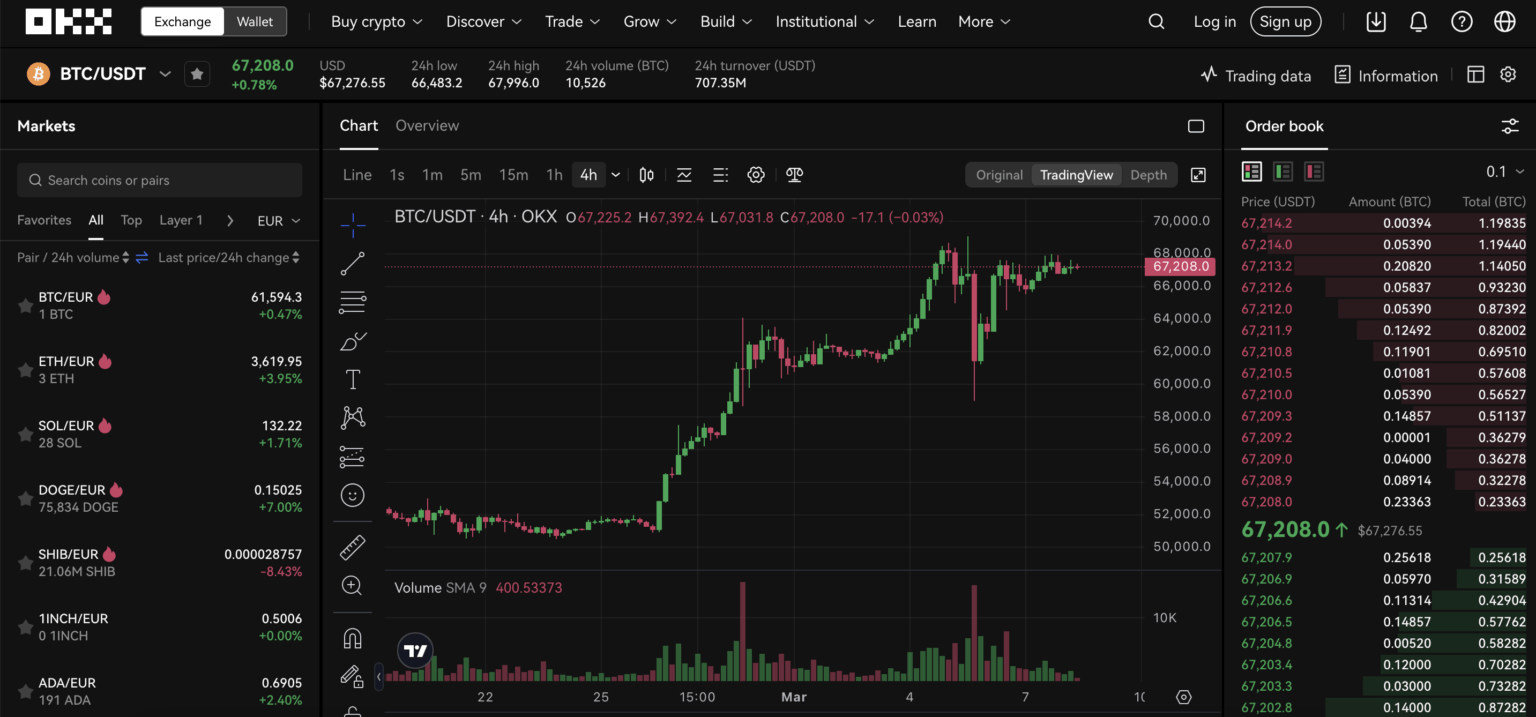
What happens when you attempt an OKX sign in?
At a systems level, OKX sign-in is a multi-stage authentication and device-risk evaluation pipeline. First, standard credentials are checked. Then the platform applies AI-driven threat detection to the session metadata — IP, device fingerprint, geolocation, timing, and behavioral signals — flagging anomalies. Finally, mandatory Two-Factor Authentication (2FA) is enforced via SMS, an authenticator app (Google Authenticator), or biometric methods if you use the mobile app. For US users this also ties into KYC identity records: large withdrawals or changes to security settings will require re-verification.
This pipeline exists because exchanges combine access to custody, trading, and sensitive identity flows. OKX augments classical encryption with real-time risk scoring to reduce account takeover, and stores the vast majority of assets in multi-sig cold wallets to limit direct systemic loss. Still, the sign-in moment is the single human-operated gate between you and the exchange’s backend controls.
Trade-offs: convenience versus attack surface
Biometric sign-in on mobile is fast and removes the friction of typing a password every trade session — a clear convenience gain for high-frequency activity. But convenience can expand the attack surface: if your phone is lost and biometric unlock is enabled without proper remote wipe or device binding, the attacker inherits both possession and authentication. Conversely, using hardware-only 2FA (a dedicated hardware token) increases protection but adds friction and the risk of being locked out if the token is misplaced.
Which trade-off is right depends on two things: the size and fungibility of your positions, and your operational discipline. A rule of thumb: if your combined balance (exchange + linked wallets) exceeds what you could instantly replace out of pocket, prioritize custody-level protections even at the cost of slower daily sign-ins.
Where sign-in mechanisms break — and how to harden them
Common failure modes are operational, not cryptographic. Phishing sites that mimic OKX pages, intercepted SMS codes through SIM swap attacks, reused passwords across breaches, and recovery workflows that rely on email with weak security are the usual culprits. OKX mitigates some of these: military-grade encryption, AI-driven login detection, mandatory 2FA, Proof of Reserves transparency, and cold storage for most assets. However, external risks remain — especially when users connect a non-custodial Web3 wallet, interact with DeFi protocols through the OKX DEX aggregator, or authorize third-party dApps.
Practical hardenings:
- Use a unique, strong password stored in a reputable password manager; never reuse across exchanges and important services.
- Prefer an authenticator app or hardware 2FA token over SMS for higher threat environments; reserve SMS only as a fallback.
- Enable device management and remote session termination, and periodically review connected apps and API keys; revoke unused API keys immediately.
- For large holdings, use tiered custody: keep day-trading capital on OKX with tighter sign-in controls, and move larger, longer-term holdings to cold storage or a self-custodial Web3 wallet with hardware-key backups.
Account recovery and KYC: friend and choke point
In the US, OKX requires identity verification (KYC) to comply with AML rules. That provides a deterrent against anonymous fraud but also creates a single point of failure: if your KYC documents are intercepted or your account email is compromised, recovery processes can be abused. Conversely, the KYC process lets OKX apply human review for suspicious recovery attempts, which can block theft — but it also means legitimate users can be temporarily locked out during disputes.
To manage this, prepare for recovery before you need it: keep KYC documents in a secure vault, register a recovery email that is also secured with 2FA, and understand the exchange’s escalation channels so you can provide identity proofs without delay. Accept that some recovery friction is an intentional safety mechanism; it’s a trade-off between fast convenience and preventing irreversible asset loss.
Special considerations for traders who also use Web3 features
OKX’s integrated model — centralized exchange plus non-custodial wallet and DEX aggregator — is powerful but adds complexity at sign-in. A single session might use exchange custody for margin while simultaneously connecting your non-custodial wallet to a dApp through the browser extension. Each connection grants different levels of permission: signing a transaction in a Web3 wallet can authorize token transfers that the exchange cannot reverse.
Rule: treat CEX login and Web3 signature flows as separate security events. Before signing anything in a wallet or approving a contract, verify the contract address, expected parameters, and whether the action could drain funds. Even when signed in to OKX, keep Web3 operations compartmentalized — ideally on a separate browser profile or device — to reduce cross-protocol attack vectors.
For a practical walkthrough of the sign-in flow and visual cues to watch for, refer to an official walkthrough: okx login. Use it as a checklist, not as the only defense: live phishing campaigns evolve, and attackers frequently update landing pages to bypass heuristics that were valid last month.
Decision framework for US traders: a reusable heuristic
When deciding sign-in posture, use this three-part heuristic: Value, Velocity, and Visibility.
- Value: How much capital is at risk in your account right now? Higher value → stricter controls (hardware 2FA, restricted withdrawal limits).
- Velocity: How quickly do you need to act? If you need to execute sub-second trades, plan for a segregated hot account with limited balance, and keep larger reserves in cold custody.
- Visibility: How observable are your logins and recovery channels? If your email or phone is shared or exposed, raise the security tier and avoid SMS 2FA.
Apply these routinely — before major market events, after changing devices, or when you add new trading products (e.g., futures with 125x leverage). The heuristic reduces ad-hoc risk decisions to a repeatable process.
What to watch next
Signal watchers should monitor adoption of account-bound hardware keys, any regulatory changes in the US that alter KYC or custody obligations, and improvements in session-based AI threat detection. OKX’s ongoing product maturity — including a mobile app marketed as a mainstream “money app” with over 100 million users globally as of this week — increases its attack surface simply by scale. Scale brings maturity in defenses, but it also concentrates incentive for attackers, so vigilance remains essential.
FAQ
Is SMS 2FA safe enough for OKX sign-in?
SMS 2FA is better than nothing but vulnerable to SIM swap attacks and interception. For typical US traders with non-trivial balances, an authenticator app or hardware 2FA token is recommended. If you must use SMS, combine it with device-bound biometrics and immediate alerts for number changes from your mobile provider.
What should I do if I suspect an unauthorized login?
Immediately log out all sessions from your OKX account settings, change your password, revoke all API keys, and reset 2FA. Contact OKX support through verified channels, and if funds moved, prepare KYC and transaction records to expedite investigation. Simultaneously notify your email and phone providers if you suspect credential compromise.
Can I use OKX and still control my private keys?
Yes. OKX offers a non-custodial Web3 wallet that stores seed phrases locally and supports hardware wallets. This lets you trade on-chain via the DEX aggregator while keeping private keys off the exchange. Remember: loss of a seed phrase is permanent; treat backups and hardware integration as primary defenses.
How does Proof of Reserves affect my sign-in risk?
Proof of Reserves improves platform transparency around backed assets but doesn’t change individual account-level risks like phishing, SIM swaps, or compromised credentials. PoR reduces systemic counterparty risk but doesn’t replace good operational hygiene at the sign-in level.
